
Why Domaine Jean-Yves Bizot Is Burgundy’s Most Sought-After Name
Our wine expert reveals the ninth on his list of the World’s Best 12 Fine Wine Estates, introducing a near‑mythical Vosne‑Romanée domaine whose tiny production now rivals Burgundy’s icons in both rarity and demand.
Along with Domaine de la Romanée‑Conti, the most iconic estate in Burgundy, the region’s top domaines are surprisingly plentiful, including Armand Rousseau, J.F. Mugnier, Leroy, Roumier, Leflaive and Coche‑Dury. Yet I have chosen a comparatively small, once‑obscure estate, with only a handful of hectares of vines, as one of the world’s greatest fine‑wine producers. Anyone who has tasted Jean‑Yves Bizot’s wines over the last decade will understand why: this tiny domaine is now consistently making some of the most compelling red and white Burgundies in existence.
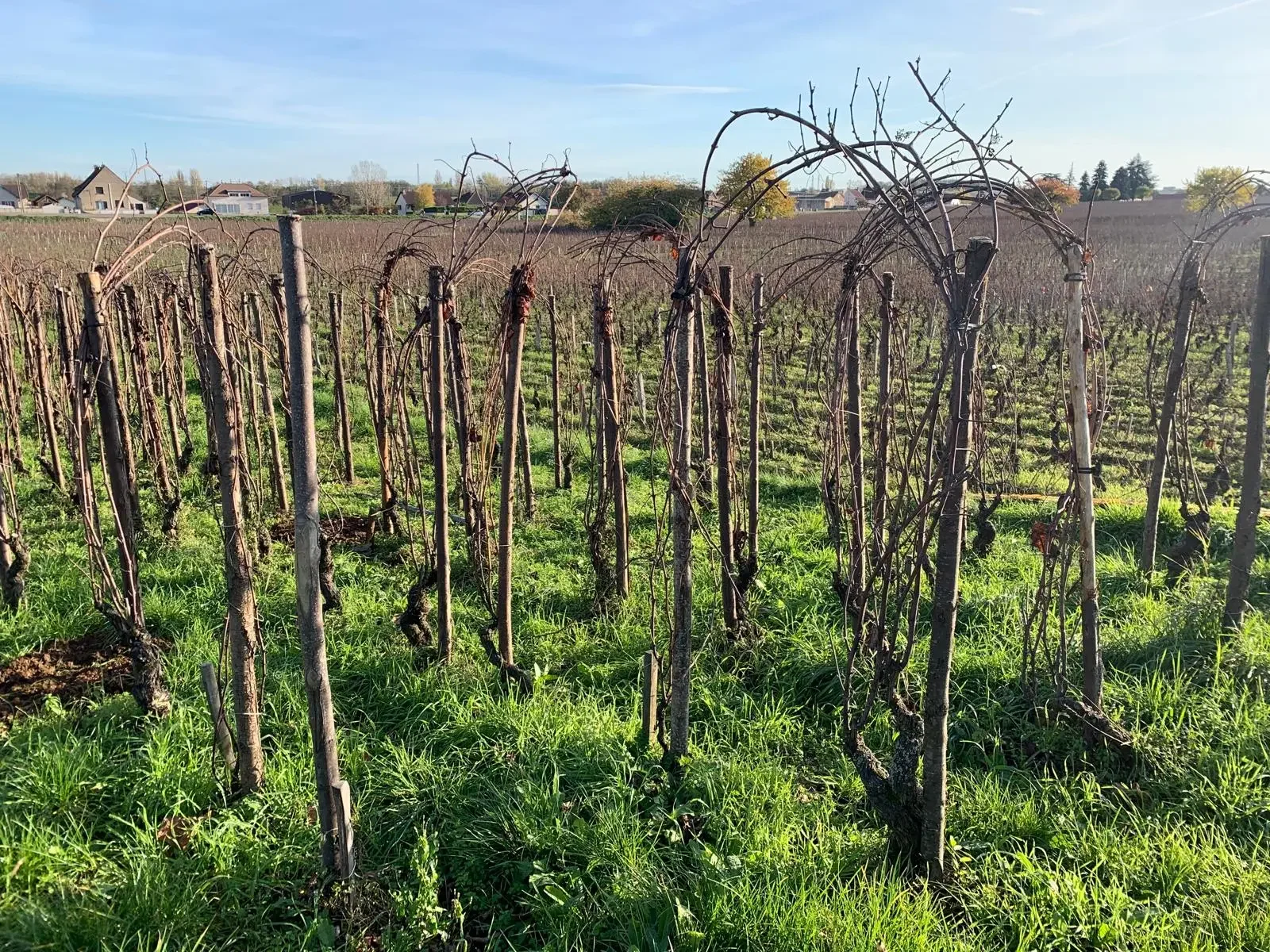
Jean‑Yves Bizot is an innovator with a deep respect for ancestral methods. Drive into the village of Vosne‑Romanée and you will see a patch of vines near the road into the village trained on individual stakes, the canes bent into an arch: the échalas system (or paisseaux, as it is known locally), which predates the introduction of wire trellising in Burgundy. This allows for very high planting density (around 17,000 vines per hectare) and encourages each vine to behave as an “individual”. Nicolas Faure, Charles Lachaux and Lalou Bize‑Leroy have also embraced this training in select parcels, but Bizot was among the first in the modern era to pursue it with such conviction.
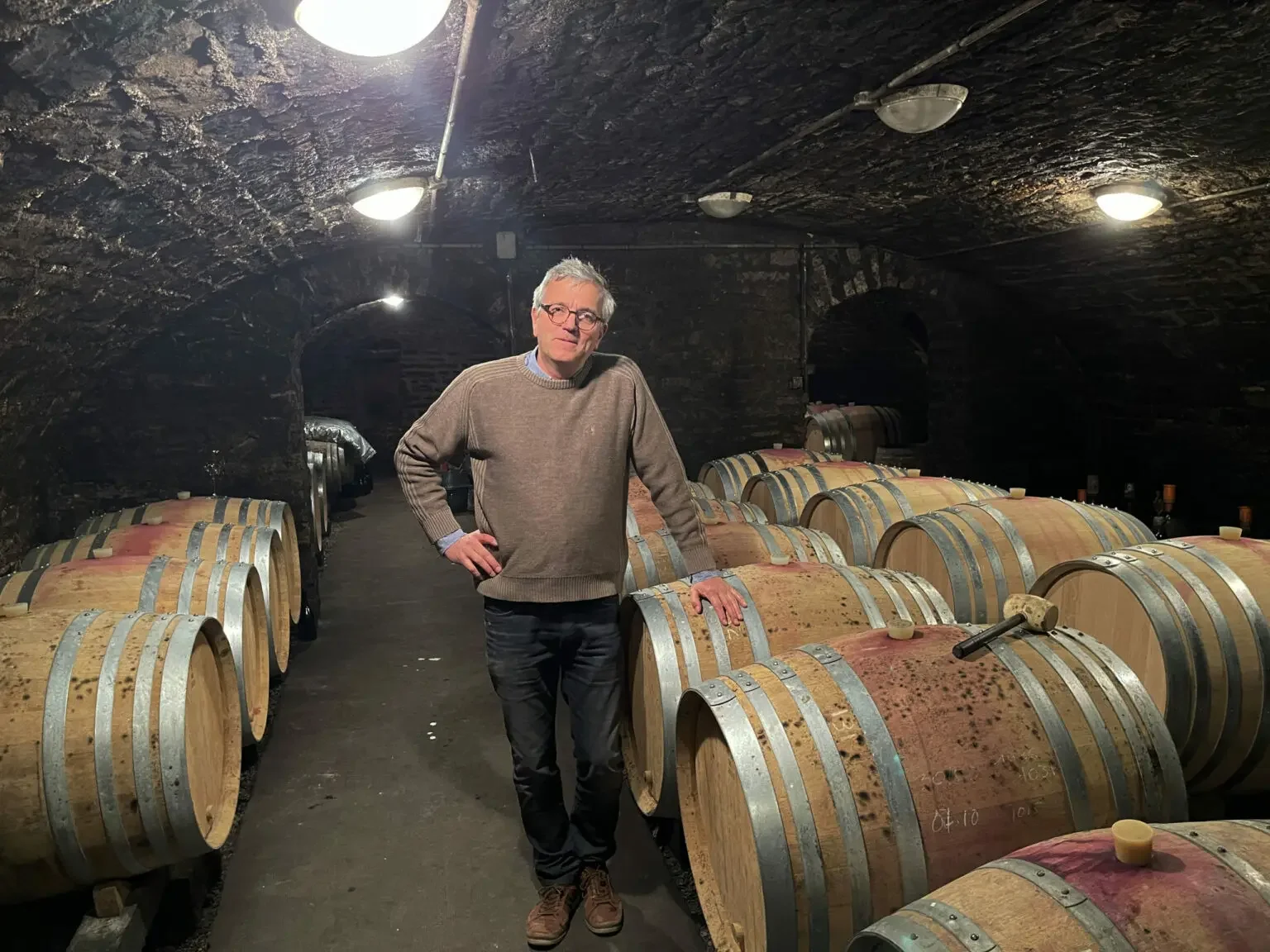
Bizot is obsessed with doing less, rather than more, in both vineyard and cellar. “As human beings, we’ve forgotten how to let the vine be. We are in a time where we need to do less,” he says. Returning to his family domaine in 1993, after years in academia and geology, he began a gradual transformation of farming and winemaking, his first wines under his own direction appearing in the mid‑1990s. The tractor was banished to avoid compacting the fragile Vosne soils. Chemical products were eliminated and plant‑based teas introduced to help vines combat disease and mildew. Shoots are left largely uncut: “It’s just a question of not cutting, so that the plant can grow completely naturally,” he explains.
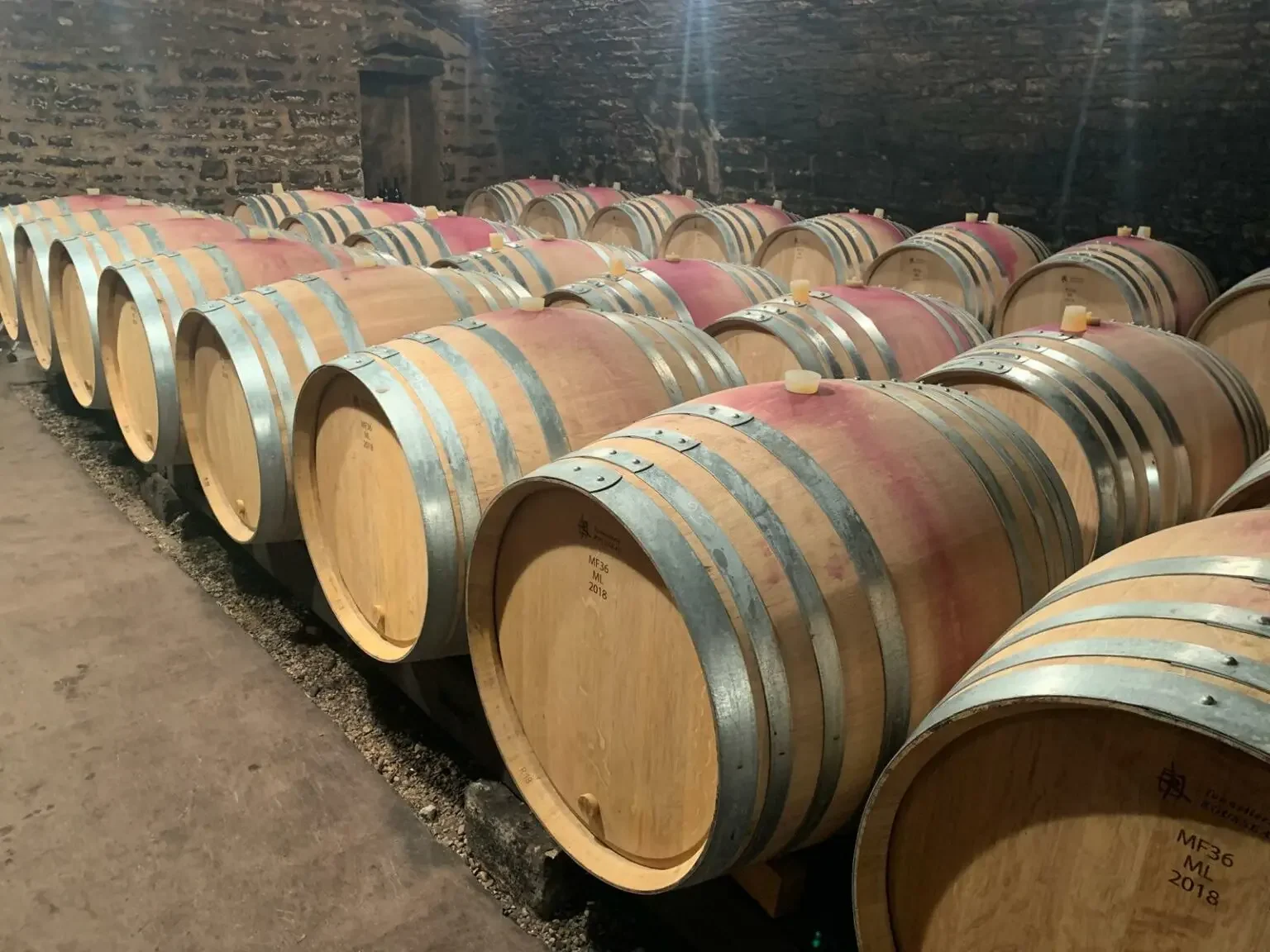
In the cellar, whole‑bunch fermentation is the norm. The wines are racked and bottled directly from barrel, entirely by hand. Although often grouped with “natural” winemakers, Bizot will use tiny amounts of sulphur dioxide during élevage and at bottling when he judges it necessary to stabilise the wines.
Today the domaine farms more than 3.5 hectares of vines in Vosne‑Romanée, Echézeaux and neighbouring sites such as Les Jachées, after the acquisition of additional holdings in Morey‑Saint‑Denis – including the monopole Clos de la Biraude – and a minuscule plot in Corton‑Charlemagne. In a normal year, total production is thought to range between 5,000 and 10,000 bottles – microscopic in the context of global demand. Unsurprisingly, finding the wines has become all but impossible for ordinary mortals: they are now archetypal “unicorns”, traded at prices approaching – and sometimes surpassing – those of Domaine de la Romanée‑Conti and Domaine Leroy on the secondary market.
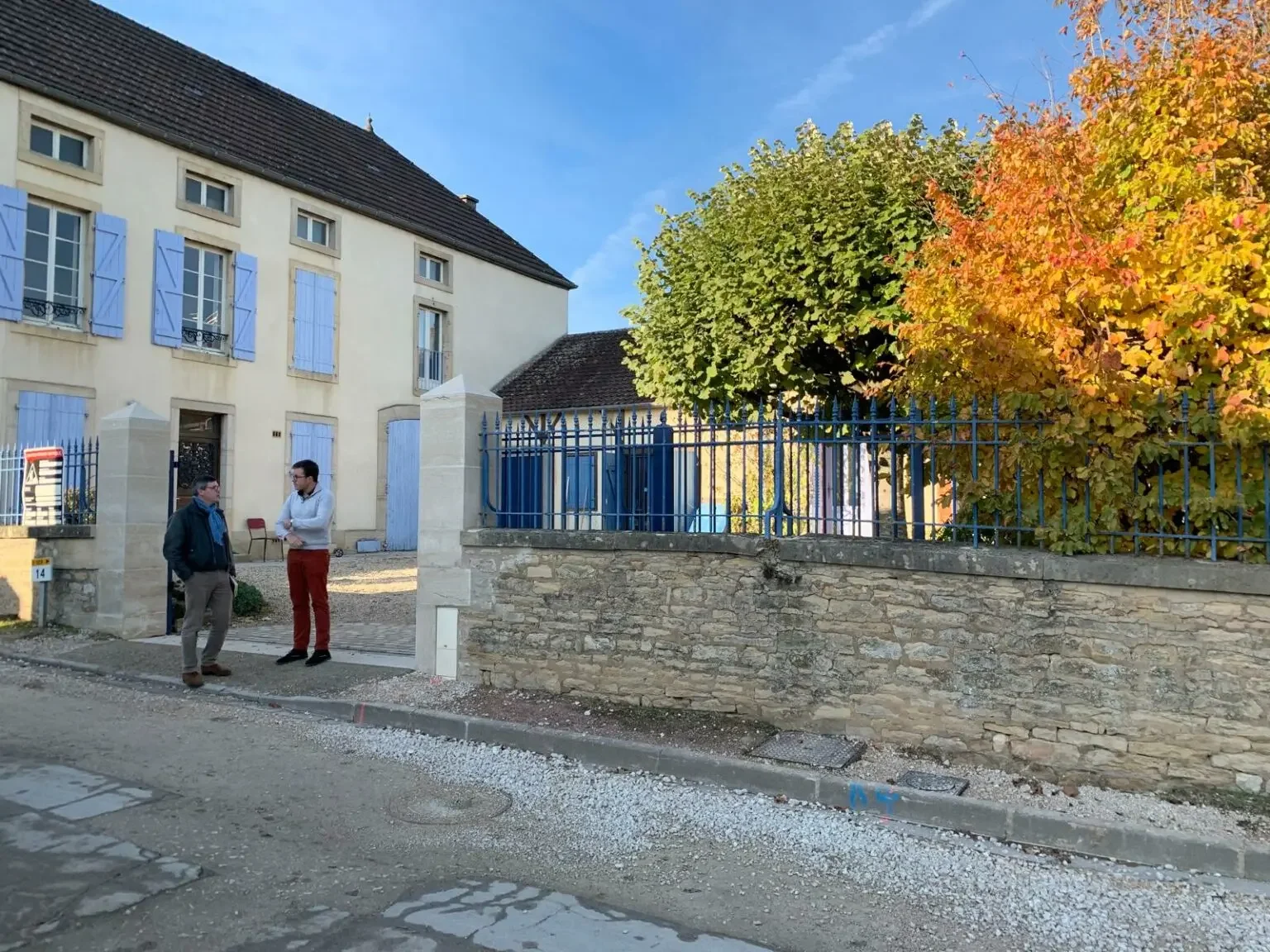
Whether red or white – including a Chardonnay from a tiny parcel bordering the Clos de Vougeot called Les Violettes that I adore – Bizot’s wines are ethereal and soulful, with a crystalline purity that is rare even at Burgundy’s highest levels. “I look for subtlety and finesse,” he says, rather modestly. In truth, the wines are majestic: they speak clearly of their individual terroir and vintages while possessing an almost disarming tenderness, intensity and charisma. In cellar barrel tastings of the 2022s, 2023s and 2024s have only reinforced, for me, the now‑widespread sense that Bizot sits at the very summit of Burgundy production. It is no coincidence that some critics cite Domaine Bizot as one of the purest modern expressions of vins d’émotion – wines prized as much for the feelings they evoke as for their technical perfection.
Jean‑Yves himself is now a rockstar of wine, with waiting lists, sold‑out dinners and feverish critical attention to every release. Yet he remains remarkably grounded and discreet for a winemaker of such renown, happiest when sharing his wines in thoughtful conversation rather than basking in the limelight. As his circle of admirers widens, one can only hope he will increasingly bring these bottles – and his singular vision – to the world’s great wine events, on the rare occasions he agrees to step into the spotlight.
Lewis’s Best 3 Wines from Domaine Jean‑Yves Bizot
Domaine Jean‑Yves Bizot, Morey‑Saint‑Denis, Clos de la Biraude Monopole, 2022 (barrel sample)
Tasted from barrel at the estate in November 2023, I fell in love instantly. Even at this early stage, the wine showed haunting perfume, a lifted, airy mid‑palate, and an interplay of subtlety, precision and elegance that carried through to a long, saline, enticing finish. I am not sure I have ever tasted a more complete young Burgundy from barrel. Intriguingly, I was told by Bizot’s right‑hand man, Victor Mignardot, that they had decided not to commercialise this inaugural vintage of Clos de la Biraude – for reasons that were not fully explained. I did my best to persuade Victor to part with a few bottles; alas, even that proved impossible.
Domaine Jean‑Yves Bizot, Bourgogne Blanc Les Violettes, 2007
Although “only” a Bourgogne Blanc on the label, due to Burgundy’s rules for white wines from classified red‑wine terroirs, this tiny parcel lies hard up against the wall of Clos de Vougeot Grand Cru and is planted with Chardonnay vines dating from 1940. The 2007 is perfection in a glass: layered complexity, crackling minerality, aromas and flavours in constant evolution, and a finish that seems to lengthen with every sip. Truly world‑class white Burgundy.
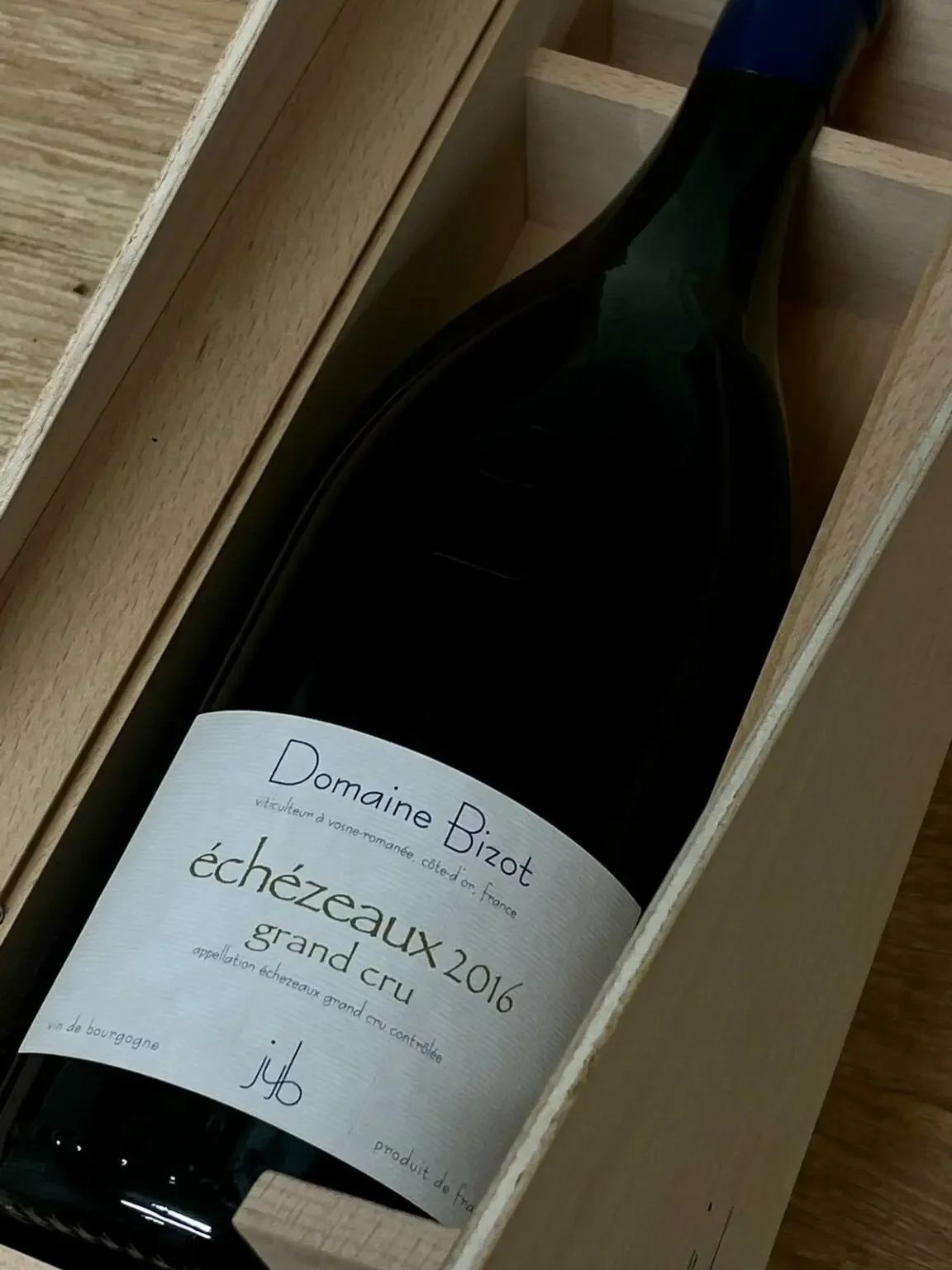
Domaine Jean‑Yves Bizot, Echézeaux Grand Cru, 2015
From a warm vintage, this Echézeaux nonetheless remains perfectly poised, its richness checked by vibrant acidity and ultra‑fine, silky tannins. The bouquet is a kaleidoscope of dark berry fruit, rose petals, sweet spice and forest floor, with a sense of cool precision that belies the heat of the year. I am reliably informed that the 2016 vintage is even more extraordinary, but – like so many Bizot devotees – I have yet to track down a bottle.
Lewis Chester DipWSET is a London-based wine & rare spirit collector and writer, member of the Académie du Champagne and Chevaliers du Tastevin, co-founder of Liquid Icons and the founder of the Golden Vines® Awards. He is also Honorary President and Head of Fundraising at the Gérard Basset Foundation, which funds diversity & inclusivity education programmes globally in the wine, spirits & hospitality sectors. The Golden Vines® 2026 will take place in London, UK between 6-8 November 2026, recognising the world’s best fine wine estates as voted by hundreds of fine wine professionals. Please register your interest for tickets on the website: liquidicons.com/work/golden-vines-awards.