
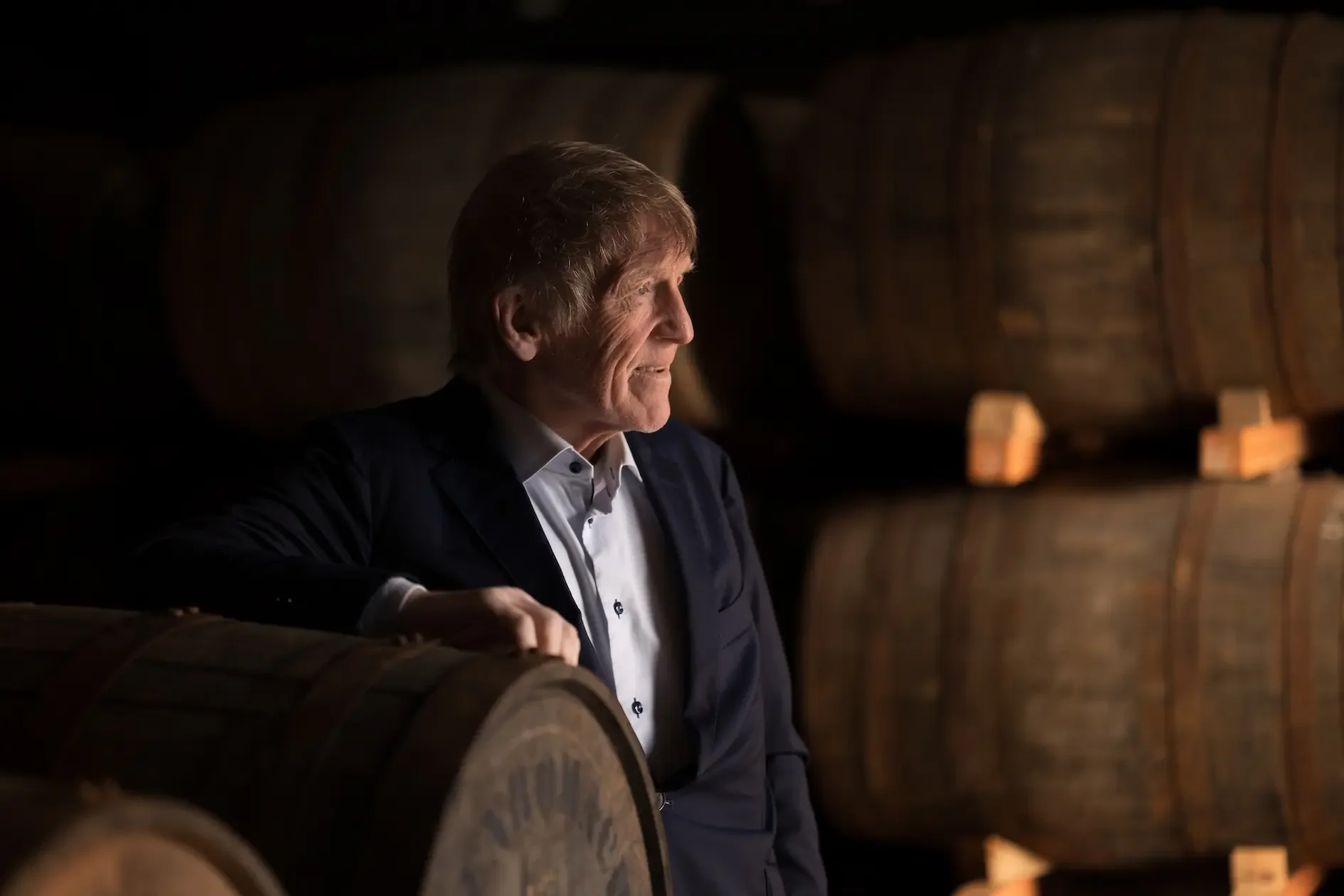
Gordon & MacPhail has turned five defining years in the life of Sir Kenny Dalglish—Scottish football royalty, Liverpool icon and title-winning Blackburn Rovers manager—into a collection of extraordinarily rare single malts. More interestingly, it has created a blueprint for collectors who want to turn their own lives into a whisky legacy.
Most old whisky tells one story: where it was made, which cask held it and how long it survived. Gordon & MacPhail’s new Vintage Moments collection tells five.
Sir Kenny Dalglish was asked to choose the years that changed his life. Not the years likely to make a Liverpool supporter reach for a credit card, but the ones he would want remembered: 1951, when he was born in Dalmarnock; 1967, when Celtic’s Lisbon Lions showed a young player what was possible; 1974, when he married Marina; 1977, when he left Celtic for the club he would become most closely associated with, Liverpool; and 1995, when Blackburn Rovers improbably became Premier League champions.
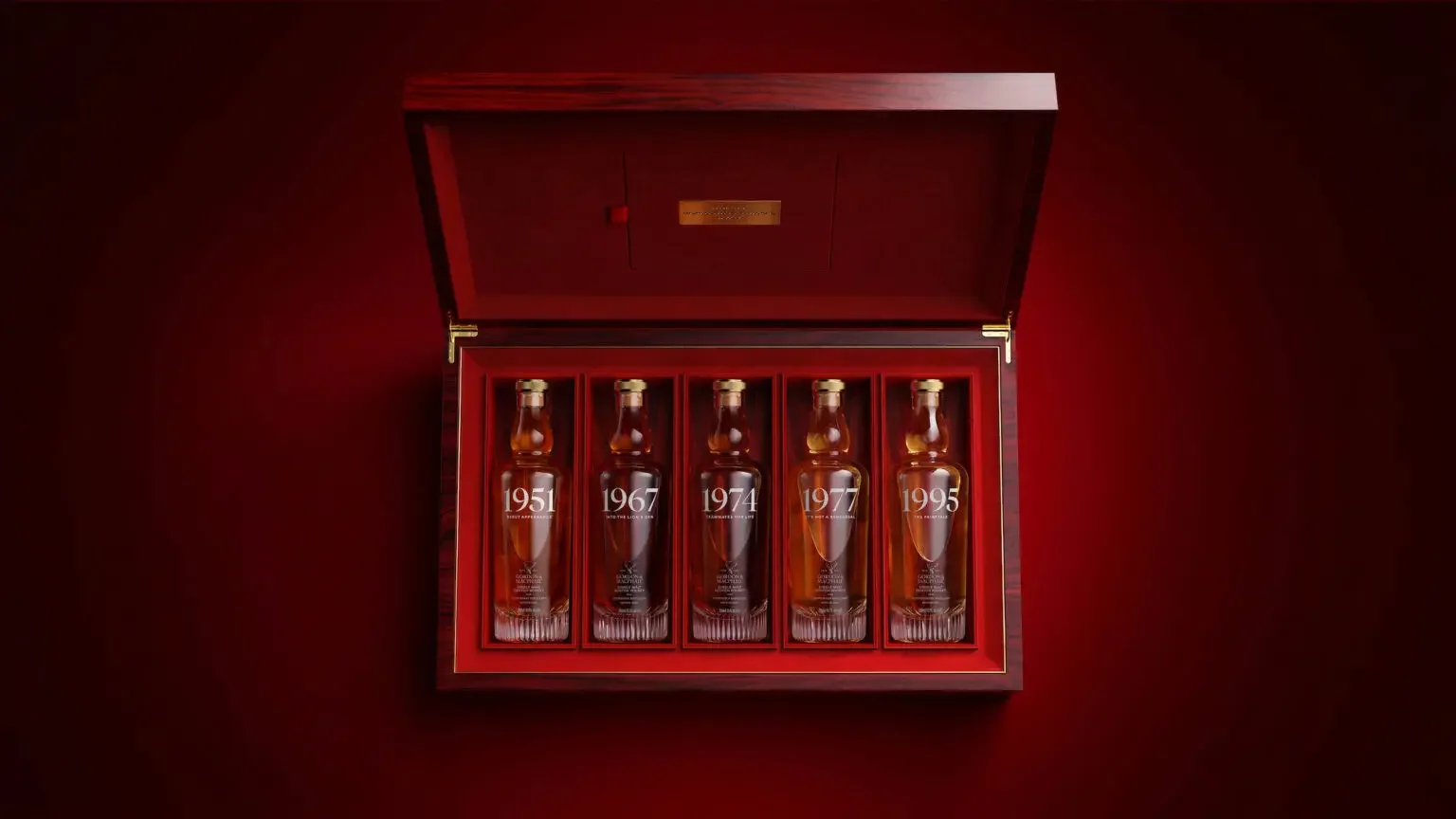
Gordon & MacPhail then went into its warehouses in Elgin and found the corresponding whiskies: a 74-year-old Glen Grant, a 59-year-old Longmorn, a 52-year-old Strathisla, a 49-year-old Benromach and a 31-year-old Glentauchers. Sir Kenny tasted cask samples and selected the five that now form Sir Kenny Dalglish’s Vintage Moments.
The result is a rare thing: not a footballer’s name on an old bottle, but a liquid biography. It moves from family and ambition to partnership, courage and belief, using five extraordinary whiskies to mark the moments that made him.
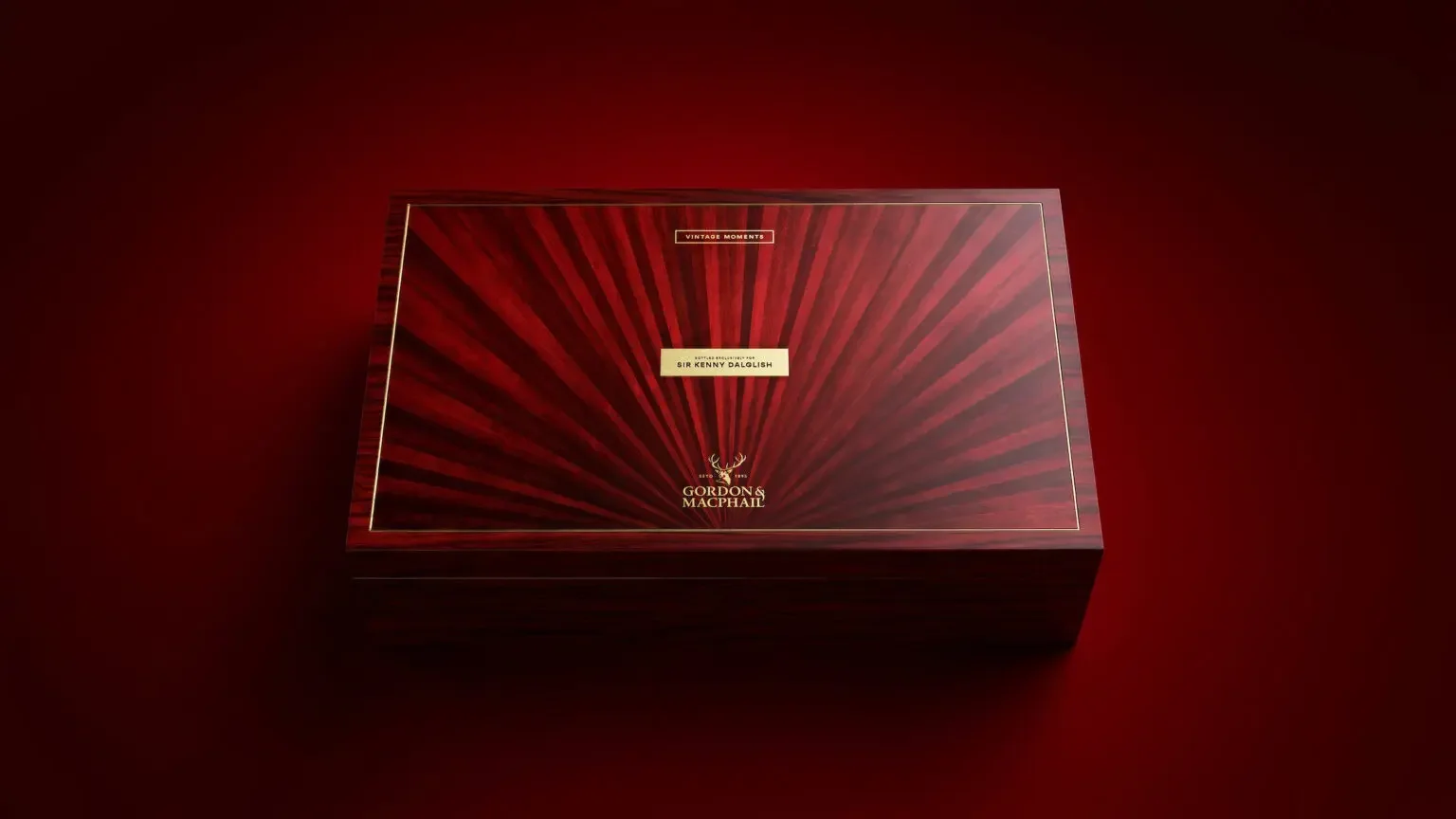
There will be 15 numbered sets, each with five 70cl bottles, a book signed by Sir Kenny and a different Dalglish fact attached to its presentation case. They cost £100,000, including a personal dinner with the legend himself.
That is expensive, obviously. But the real point is not simply that 15 buyers can own Sir Kenny Dalglish’s five moments. It is that Gordon & MacPhail wants to show a small group of private clients how to create the same kind of legacy for themselves.
A Blueprint for a Personal Legacy
A collector identifies five dates from his own life. They might be a birth year, a marriage, the arrival of children, the foundation or sale of a business, a recovery from illness, a retirement or a sporting achievement. Gordon & MacPhail then searches its cask library for whiskies distilled in those years, creates a shortlist around the collector’s palate, and invites him to Elgin to taste them.
The company has mature stocks from every vintage from 1948 to the present day, drawn from relationships with more than 100 Scottish distilleries. It is the product of more than 130 years of family ownership and a practice that few independent bottlers ever had the patience—or the capital—to pursue: supplying its own casks to distilleries, receiving them filled with new make and allowing them to mature on its own terms.
The five Dalglish casks themselves trace the Urquhart family’s stewardship. The 1951 Glen Grant was laid down by Stephen Rankin’s great-grandfather and grandfather. The 1967 Longmorn was laid down by his grandfather, as the third generation began to enter the business. The 1974 and 1977 casks followed under his grandfather and uncle Ian Urquhart; the 1995 Glentauchers was laid down by Ian with Ewen MacIntosh, the long-serving cask custodian who bridged the third and fourth family generations.
Anyone can leave whisky in wood for a long time. The difficult part is knowing when not to. “Every cask has almost got a destiny,” Rankin told me. “We make sure it gets bottled in its prime, rather than leaving it until it is older through either hope or forgetfulness.”
That is the difference between patience and neglect.
The client experience can include time in the sample room and warehouses, private dining, a Highland stay in a castle and golf at some of the courses within reach of Speyside. The eventual five whiskies are hand-drawn from cask, bottled at cask strength and presented in a personalised wooden coffret. A book can record why each year matters, leaving a message for a spouse, children, grandchildren, colleagues or friends.
“The first step is always an interview with the person,” Rankin said. “It is not just about the stories of their life and the great moments. It is about understanding their level of whisky appreciation, their favourite styles and distilleries, then helping them decide which years genuinely matter.”
The £100,000 price belongs to the Sir Kenny release. It should not be treated as a standard price for a private commission. The private-client programme has a £100,000 minimum spend, but the final cost will depend on the vintages, the rarity of the casks, whether several sets are wanted for a family and the scale of the Scottish experience. Only 10 private commissions will be accepted each year.
In other words, this is not simply a way of buying old whisky. It is a way of preserving a life’s legacy through bottles.
1951: Debut Appearance
The collection begins with 1951, the year Sir Kenny was born in Dalmarnock, Glasgow.
“Everything has to start somewhere,” he says. “For me it started in Dalmarnock on 4 March 1951.” He speaks about parents who worked hard, a close family and the values formed before football arrived to change his life.
The whisky is a 74-year-old Glen Grant, matured in a first-fill sherry puncheon and bottled at 49.8 percent ABV. In theory, that ought to be a whisky crushed by age and wood. It is not.
The colour is a handsome amber rather than the near-black you might expect from something this old. On the nose, it has stewed apple, tangerine peel, leather and old oak, then something herbal and faintly medicinal—not peat, not smoke, but the curious industrial trace of a different era of distillation.
On the palate, it has orange marmalade, dried tobacco, poached pear and toasted hazelnut, with a crack of black pepper through the middle. A few drops of water draw it all together.
Old whisky often advertises its age. It tastes of wood, dust and an impressive length of time spent in a dark corner of a warehouse. This did not. It had brightness, tension and real vitality.
What struck me most was how little it tasted like a conventional first-fill sherry bottling. After seven decades, the sherry had ceased to sit on top of the spirit as a separate flavour. It had been absorbed into it. The cask had not disappeared, but it had become inseparable from the whisky.
Rankin called it a whisky of “grace” and “dignity”. That is exactly right. It is serious, refined and complex, but not remotely tired—an obvious parallel with Sir Kenny himself.
1967: Into The Lion’s Den
The 1967 Longmorn is the bottle I would most happily pour again immediately.
That year, Celtic’s Lisbon Lions won the European Cup, making every young player in Glasgow believe, as Dalglish puts it, “anything was possible”. He began pre-season with the Celtic first team that summer and soon signed professionally.
He also considered 1971, when he first appeared for Scotland, and 1978, the year of his first European Cup win with Liverpool. But 1967 has the deeper claim: it was the year the horizons of a young Celtic player first widened.
The 59-year-old Longmorn, aged in a first-fill sherry butt, is darker, richer and rounder than the Glen Grant. There is treacle toffee, aniseed, Morello cherry, blackberry and candied citrus on the nose, with an excellent mahogany-furniture-polish note rather than obvious prunes or Christmas cake.
This is very much my style of whisky: oily, gently waxy, with a dried-fruit lift through the middle and enough sweetness to make it moreish without becoming heavy. There are no awkward tannins, no acerbic edge and no bitterness from the oak. The flavour falls away, then returns as you lick your lips, carrying coffee, citrus and a faint ashiness.
The Glen Grant commands attention. The Longmorn invites another glass.

1974: Teammates for Life
The emotional centre of the collection is the 1974 Strathisla, marking Sir Kenny’s marriage to Marina MacDougall, on her birthday.
“I was lucky enough to win a few doubles during my football career,” he says, “but the best double of all was marrying Marina on her birthday.”
Then comes the line that explains the choice: “Marina has never been behind me. She’s always been beside me. Whatever football brought our way, we faced it together, and I couldn’t have asked for a better teammate.”
The whisky is a 52-year-old refill-sherry-butt Strathisla at 55 percent ABV. It has one of the silkiest mid-palates I have encountered in a long time—like a silk blanket across the mouth.
Aged leather, dark chocolate, almond, dried fruit and treacle lead into roasted coffee, fruitcake, forest fruits, nutmeg and Seville orange. For me, the defining combination was dark chocolate and cherry. It is powerful but never aggressive, with only a little drying oak and pepper at the end.
It would be spectacular with a chocolate dessert, or perhaps duck à l’orange.
1977: It’s Not a Rehearsal
In 1977, Dalglish left Celtic for Liverpool for a British-record £440,000. It was one of the most consequential decisions of his life.
“Leaving Celtic was one of the hardest decisions I ever made,” he says. “But football doesn’t wait for anyone and I felt it was the right time to challenge myself.”
The title of the whisky, It’s Not a Rehearsal, gets it right. At some point, you have to make the difficult move rather than spend your life wondering whether you should have.
The Benromach carries a second, equally important story. Distilled in 1977, it comes from the original Benromach, before the distillery closed in 1983. The site was later bought by Gordon & MacPhail in 1993, restored over five years and reopened in 1998. The revived distillery used different still shapes and sizes, and introduced a trace of smoke to the malted barley. This is therefore not simply an old Benromach. It is a surviving example of a pre-closure distillery style that no longer exists.
The 49-year-old first-fill-sherry-hogshead whisky is perhaps the most immediately approachable of the five. It has spiced pear, vanilla custard, strawberry, tangerine and walnut on the nose. I kept returning to poached pear with vanilla custard: creamy, welcoming and easy to understand.
It is less intricate than the Glen Grant or Longmorn, but that is not a flaw. I suspect this will be the bottle most people reach for first. It is charming from the outset, generous on the palate and carries stewed summer fruit, sweet tobacco, pepper and citrus into a lightly mentholated finish.
1995: The Fairytale
The final whisky takes us to 1995, when Dalglish led Blackburn Rovers to the Premier League title.
On the final day, Blackburn lost 2–1 to Liverpool at Anfield, but Manchester United could manage only a draw at West Ham. Dalglish’s side were champions by a single point and celebrated on the pitch at the stadium where he had enjoyed so much of his own success.
“It was an incredible achievement,” Dalglish says, “and doing it at Anfield made for one of football’s more unusual stories.”
The Glentauchers is the youngest whisky in the set: 31 years old, matured in a first-fill sherry butt and bottled at 57.2 percent ABV. At first, I did not much like the nose. It was hot, slightly awkward and less alluring than the four whiskies before it. A little water and some time in the glass changed that view entirely.
Waxy red apple, cinnamon, clove, vanilla butterscotch and lime zest emerged. Stephen Rankin described a quality reminiscent of the waxed paper that once wrapped oranges and tangerines, which sounds odd until you smell it.
The palate has dark chocolate and orange, stewed fruit, raspberry, pepper and oak. The finish is not as long as the oldest whiskies, but it has real power and a pleasing tingle on the tongue. It closes the flight with energy rather than nostalgia.
That is appropriate. Rankin sees this freshness and liveliness as a reflection of Dalglish himself: still active, still playing golf and still embracing life with the same optimism that carried Blackburn to their unlikely title.
The Point of It All
It would be easy to dismiss this as expensive memorabilia for Liverpool supporters. That would miss the point.
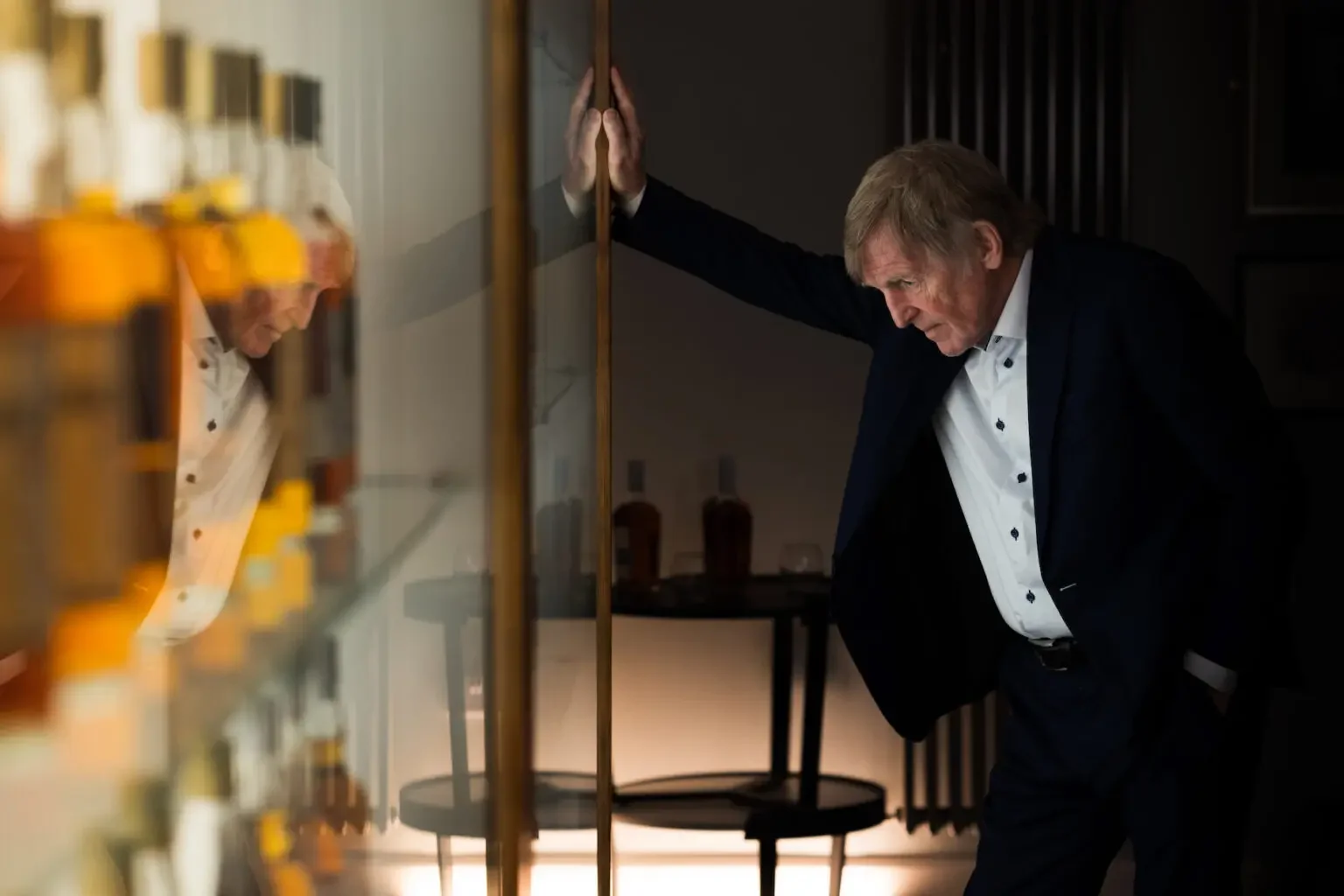
The Dalglish connection will sell sets. So will the fact that there are only 15, that each comes with a signed book and that buyers will have the opportunity to meet Sir Kenny. But what makes the collection interesting is that it shows what a personal whisky legacy can look like.
Sir Kenny has chosen five years that explain something about him: where he came from, what he dreamed of, whom he trusted, when he took a risk and what he achieved with other people. Another collector’s choices would be entirely different.
The dates are private. The idea is not.
Great whisky captures time. A Vintage Moments collection captures a life.
Lewis Chester DipWSET is a London-based wine & rare spirit collector and writer, member of the Académie du Champagne and Chevaliers du Tastevin, co-founder of Liquid Icons and the founder of the Golden Vines® Awards. He is also Honorary President and Head of Fundraising at the Gérard Basset Foundation, which funds diversity & inclusivity education programmes globally in the wine, spirits & hospitality sectors. The Golden Vines® 2026 will take place in London, UK between 6-8 November 2026, recognising the world’s best fine wine estates as voted by hundreds of fine wine professionals. Please register your interest for tickets on the website: iquidicons.com/work/golden-vines-awards.